



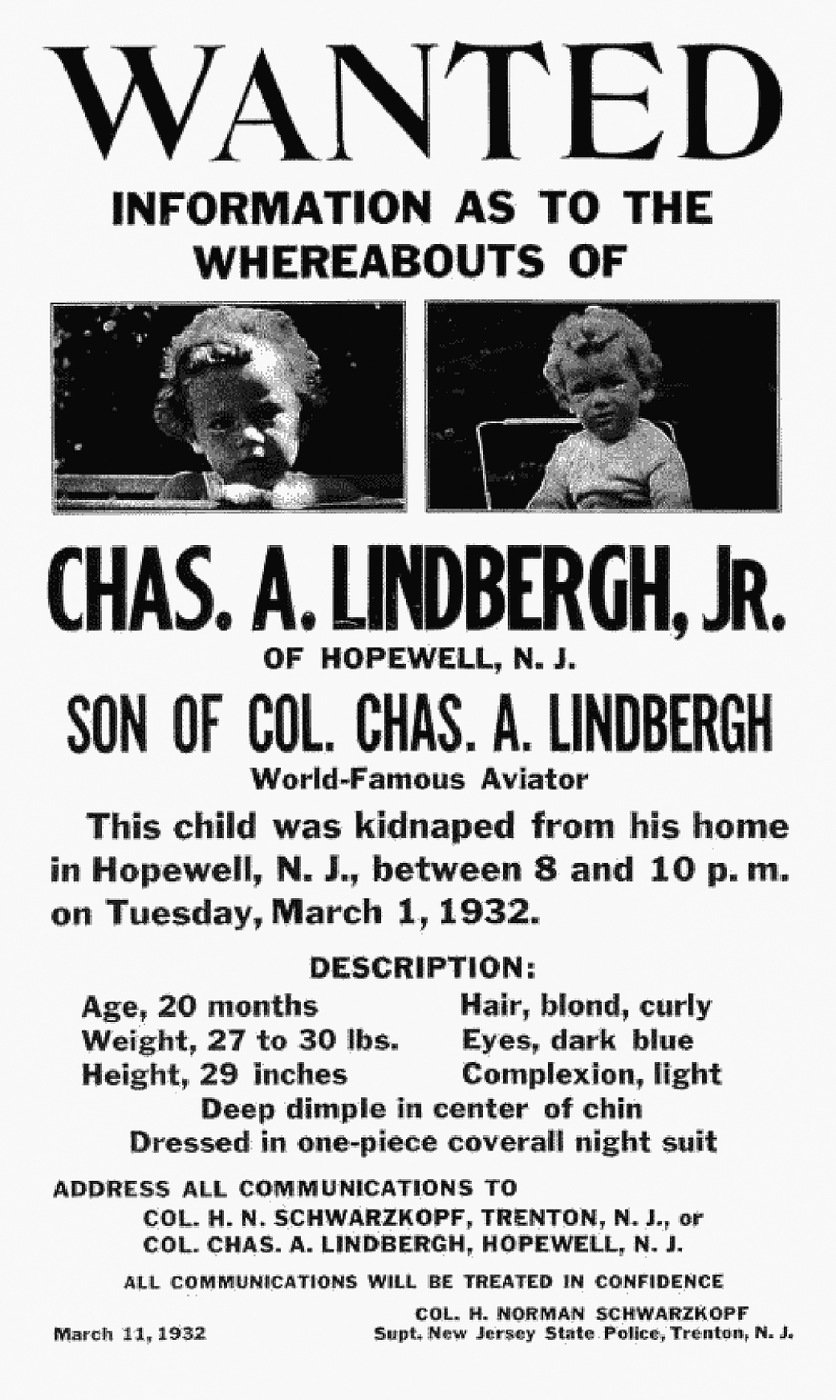
Today marks the 93rd anniversary of one of the most infamous crimes in American history: the abduction of Charles Lindbergh Jr., the 20-month-old son of famed aviator Charles Lindbergh and his wife, Anne Morrow Lindbergh.
On the evening of March 1, 1932, the toddler was taken from the second-story nursery of the Lindbergh family’s secluded estate in Hopewell, New Jersey, in a brazen act that would end in tragedy and captivate the nation for decades to come.
The abduction unfolded under the cover of darkness. A homemade ladder, later found broken and abandoned near the house, was used to reach the nursery window.
A ransom note demanding $50,000 was left on the windowsill, setting off a frantic investigation involving local police, the New Jersey State Police, and federal authorities.
Desperate for their son’s safe return, the Lindberghs cooperated with the kidnapper’s demands. A series of ransom notes followed, culminating in the delivery of the payment by an intermediary, Dr. John F. Condon, in a Bronx cemetery.
Despite the payment, the family’s hopes were shattered on May 12, 1932, when the body of young Charles Lindbergh Jr. was discovered in a shallow grave just a few miles from the Lindbergh estate.
The child had been killed by a blow to the head, and it appeared the body had been hastily buried shortly after the abduction. The discovery sent shockwaves across the nation, turning the case into what would later be dubbed the “Crime of the Century.”
The Lindbergh kidnapping not only devastated the family but also led to significant changes in American law. The outrage and public outcry over the crime prompted Congress to pass the Federal Kidnapping Act, commonly known as the “Lindbergh Law,” which made transporting a kidnapping victim across state lines a federal offense.

The case also highlighted the vulnerabilities of even the most secure homes and the challenges of protecting public figures and their families. Charles Lindbergh and his wife Anne hoped to stay out of the constant glare of the media spotlight on a beautiful 390-acre estate on the rural outskirts of Hopewell, New Jersey, in the years following the aviator’s historic non-stop flight across the Atlantic.
In 1934, more than two years after the abduction, Bruno Richard Hauptmann, a German immigrant, was arrested and charged with the crime. Hauptmann was convicted in a highly publicized trial and executed in 1936, though doubts about his guilt have persisted among some historians and legal experts, keeping the case a subject of debate and fascination.
Today, as we reflect on the 93rd anniversary of this tragic event, the Lindbergh kidnapping remains a poignant reminder of a dark chapter in American history. The Lindbergh family, who endured unimaginable grief, has long since retreated from the public eye, but the legacy of the case continues to resonate. Memorials and historical markers in Hopewell and surrounding areas serve as somber reminders of the loss of young Charles Lindbergh Jr. and the enduring impact of the crime.
As we remember this tragedy, we also honor the resilience of the Lindbergh family and the lessons learned from a case that forever changed the way the nation approaches kidnapping and child safety.
Lindbergh had stunned the world and shot to inconceivable fame after he became the first man to fly solo across the Atlantic in 1927.


Two years later he married Anne Morrow, the beautiful daughter of the wealthy US Ambassador Dwight Morrow. It was a marriage made in heaven and they were dubbed the ‘perfect’ couple.
But their lives changed forever when their first-born was abducted from the second floor nursery of their home in Hopewell, New Jersey at about 9pm on March 1, 1932. A ransom note demanding $50,000 was left behind.
During the 1940s, Charles Lindbergh became a social outcast due to his pro-German and anti-Semitic views expressed in public speeches and personal writings.
The story of the Lindbergh baby, while often hailed as a testament to justice, leaves lingering questions about the integrity of the investigation and the true nature of the crime.
Despite the conviction of Bruno Richard Hauptmann, doubts about his guilt and the handling of the case have persisted for decades, casting a shadow over the pursuit of justice.
The tragedy serves as a sobering reminder of how public pressure and media sensationalism can influence legal outcomes, and how even the most high-profile cases can be marred by uncertainty.
As we reflect on this dark chapter, it challenges us to scrutinize the systems meant to protect the vulnerable and to question whether justice was truly served.