

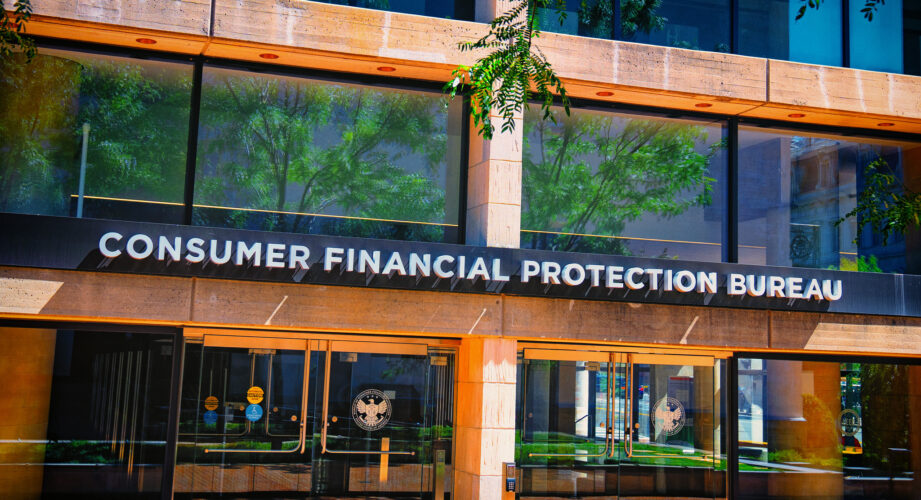
The Consumer Financial Protection Bureau, created in the wake of the 2008 financial crisis to police predatory lending, has been fundamentally reshaped under the second Trump administration. Its enforcement powers are gone. Its staff has been cut by more than two-thirds. The acting director has ordered employees to halt nearly all supervisory activities.
But the agency’s consumer complaint database is still running.
That contradiction defines the bureau’s strange half-life in 2026. Built to investigate and sue financial companies that cheat customers, it now functions primarily as a passive collector of grievances — a library of problems rather than a solution.
The CFPB opened in 2011 as an independent bureau within the Federal Reserve System. Congress designed it to operate outside the annual appropriations process, funding it through the Fed to shield it from political pressure. The idea was straightforward: After banks and lenders triggered a global economic collapse with subprime mortgages and deceptive products, someone needed to watch the watchmen.
For 14 years, the bureau returned more than $20 billion to consumers through enforcement actions. It went after Wells Fargo for fake accounts, credit bureaus for botched disputes, and payday lenders for trapping borrowers in debt.
Then came the second Trump administration and Project 2025.
A new direction
President Donald Trump appointed Russell Vought as acting CFPB director in February 2025. Vought, who also directs the Office of Management and Budget, was a primary author of the Heritage Foundation’s Project 2025, a detailed blueprint for reducing the size and reach of federal agencies.
Within weeks, he issued a stand-down order. Staff were told to cease all supervision, examination, and enforcement activities. The bureau’s Washington headquarters was temporarily closed. Its website went dark for a period, displaying only error messages.
The administration announced plans to cut the agency’s headcount from 1,700 to 500. A federal judge blocked an earlier attempt to go to 200, but the reductions moved forward regardless.
“The complaint system is working, but the internal parts of the CFPB that are supposed to use the complaints are not working,” said Erie Meyer, who served as the bureau’s first chief technologist from 2021 to 2025.
The bureau’s new strategic plan for 2026 through 2030 explicitly embraces a deregulatory agenda. It commits to reducing “unwarranted regulatory burdens,” eliminating “novel legal theories” from enforcement actions, and focusing only on cases involving “identifiable victims with material and measurable damages.”
A major rule change finalized in April narrowed the scope of anti-discrimination enforcement under the Equal Credit Opportunity Act. Lenders will no longer be judged on “disparate impact” — policies that appear neutral but cause disproportionate harm to minority groups. Fair housing organizations filed a federal lawsuit in May challenging the change.
The data that remains
Despite the upheaval, the CFPB’s consumer complaint database stays online. Companies must confirm that a complainant was their customer before a complaint is published. Customers consent to having their written narratives released.
That creates an unusual resource. The complaints are not anonymous rants. They are verified accounts from real customers, rich with details about how financial products fail the people who use them.
“Credit reporting complaints — people complaining about potential issues with their credit reports — have been exploding in recent years,” said Joel Jacobs, a data reporter for ProPublica who has mined the database for stories. “They’re really, by far, the most common complaint.”
Reporters can search for terms like “groceries,” “bread” or “formula” to find complaints from lower-income Americans describing their struggles with the financial system.
But the database has limits. Complaints are anonymized. A reporter cannot call the person who wrote that a bank turned off her card when she tried to buy milk. For sources, Jacobs recommends bankruptcy cases and lawsuits, where lawyers and their clients are identified.
States step in
With federal enforcement frozen, state attorneys general have become the primary enforcers of consumer financial laws. Twenty-four states sued the CFPB to keep the complaint database operating because they rely on it for their own investigations.
The bureau’s data still helps identify patterns of misconduct. But the agency that once sued companies and forced refunds now mostly points others to the door.
Senate Democrats attempted in May to roll back several of the administration’s CFPB policy changes, including the reversal of rules on overdraft fees and medical debt collection. Republicans blocked the efforts largely along party lines.
“The Trump administration is hell-bent on destroying the agency,” said Sen. Elizabeth Warren, D-Mass., who first proposed the bureau before the 2010 Dodd-Frank Act created it.
Republicans argue the CFPB had accumulated too much power with too little accountability. “I can’t think of a worse way to govern,” said Sen. Tim Scott, R-S.C., chairman of the Senate Banking Committee.
What remains
The bureau still exists. Its complaint portal still accepts submissions. Its FOIA office still responds to requests. Its database still holds millions of records, each one a small story about something going wrong between a person and a bank, a lender or a credit bureau.
But the people who used to read those stories and turn them into lawsuits and fines have been told to stop.
The CFPB is not dead. It is just no longer doing what it was built to do.

Leave a Reply