

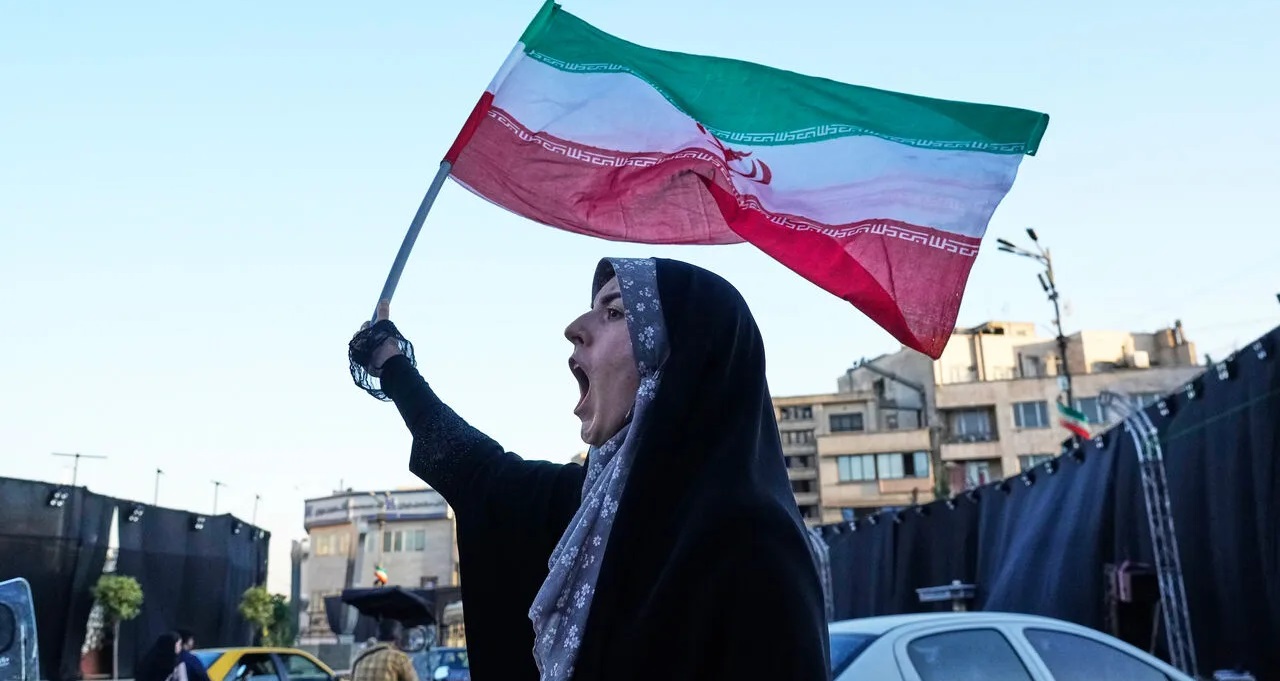
Iran is claiming victory in the war launched by the United States and Israel, following the acceptance of a memorandum of understanding negotiated with the assistance of Pakistan.
Tehran-aligned media outlets report that the U.S. and its allies are obligated to present at least $300 billion in reconstruction plans and economic development for Iran.
Tehran claimed the US “forced to sign” a surrender, with Iran’s military saying their enemies had “no choice but to accept defeat.” At the same time, Israel announced its forces would stay in Lebanon, Syria, and Gaza “indefinitely.”
The initial US-Iran agreement reached on Sunday has already encountered challenges, as Tehran asserts it plans to control maritime traffic through the Strait of Hormuz as the war’s victor, and Israel insists that it would hold onto land seized in Lebanon as it battles Hezbollah.
If the terms described by Iranian officials survive scrutiny and are ultimately incorporated into a final agreement, Tehran will emerge from more than three months of war claiming that it preserved the core assets Washington and Jerusalem said they were determined to eliminate.
Iranian Deputy Foreign Minister Kazem Gharibabadi said after fourteen hours of negotiations on Sunday that Washington made a series of concessions that cleared the way for a framework agreement.
Prime Minister Shehbaz Shar of Pakistan announced that the United States and Iran had agreed to an “immediate and lasting end to military operations on all fronts, including Lebanon,” a stance also highlighted by Iranian officials.
According to Iranian and Pakistani officials, the memorandum calls for the lifting of the U.S. naval blockade, the reopening of the Strait of Hormuz, an extension of the ceasefire, and sixty days of additional negotiations over Iran’s nuclear program rather than immediate restrictions on it.
That distinction matters.
The United States and Israel publicly framed war as a reaction to Iran’s nuclear ambitions, but several reports suggest the agreement defers decisions about the future of Iran’s nuclear activities later negotiations.
Iran’s stockpile of highly enriched uranium is still a major unresolved concern, with no public indication that Tehran has agreed to give it up. According to Reuters, the draft framework leaves the country’s nuclear program to be addressed in a sixty-day window of further negotiations.
With the Iranian regime still in place, President Donald Trump was celebrating a resumption of the way the world was on Feb. 27, the day before the United States and Israel launched the unprovoked attack against Iran.
Speaking at a press conference on the sidelines of the G7 in Évian, European Commission President Ursula von der Leyen said that any EU decision to lift sanctions on Iran would depend on “real change on the ground.”
The EU has several sanctions against Iran in place, including on the violation of human rights and on weapons of mass destruction, Von der Leyen said. “And the principle of sanctions is that we need real change on the ground before we can think about lifting them”.
“Sanctions are in place to change behavior. So if behavior is changing credibly and verifiably, then you can lift sanctions,” said Von der Leyen.
Iran’s missile forces, while heavily damaged during months of strikes, also remain intact. The result is a deeply uncomfortable political reality for supporters of the war.
After months of fighting, significant military expenditures estimated at $90 billion, disruption of global energy markets, and repeated assurances that decisive objectives were within reach, neither the destruction of Iran’s missile capability nor the dismantling of its nuclear infrastructure appears to have been secured in the initial agreement.
Pakistani Prime Minister Shehbaz Sharif announced that the United States and Iran had agreed to an “immediate and permanent termination of military operations on all fronts, including in Lebanon,” and said the agreement would be formally signed on June 19 in Switzerland. He credited Qatar, Saudi Arabia, and Türkiye for helping bring the negotiations to a conclusion.
That language immediately exposed one of the agreement’s most uncertain provisions. Neither Israel nor Hezbollah is a party to the U.S.-Iran understanding. Fighting in Lebanon intensified after the broader regional war erupted in late February, and Israeli military operations there have continued despite diplomatic progress between Washington and Tehran. Reports from multiple outlets indicate that Lebanon remains one of the most contentious unresolved issues surrounding the framework.
The framework reportedly commits the United States to begin dismantling its naval blockade while Iran undertakes mine-clearing operations and facilitates the reopening of the Strait of Hormuz, one of the world’s most important energy chokepoints. The arrangement would largely restore conditions that existed before the conflict disrupted shipping and sent shock waves through global oil markets.
Iranian officials have portrayed the outcome as proof that military pressure failed to force Tehran into surrender. American supporters of the agreement argue that the framework stops a costly war, restores shipping through the Gulf and creates a pathway toward a broader settlement.
Critics see something different. They argue that Washington entered the conflict promising to eliminate strategic threats and exited with many of the same threats still awaiting negotiation. If the final agreement resembles the framework now described by negotiators, historians may ultimately conclude that the most consequential achievement of the war was not the defeat of Iran’s nuclear program but the return of all sides to a negotiating table they might have occupied months earlier.
For now, the memorandum remains a framework rather than a final peace treaty. The official text has not been fully released, the agreement has not yet been formally signed, and the most difficult questions—the future of Iran’s nuclear activities, the disposition of sanctions, and the fate of conflicts involving regional proxies—remain unresolved. Those questions, not the celebratory statements issued by any government, will determine who actually won and who merely declared victory first.


Leave a Reply