

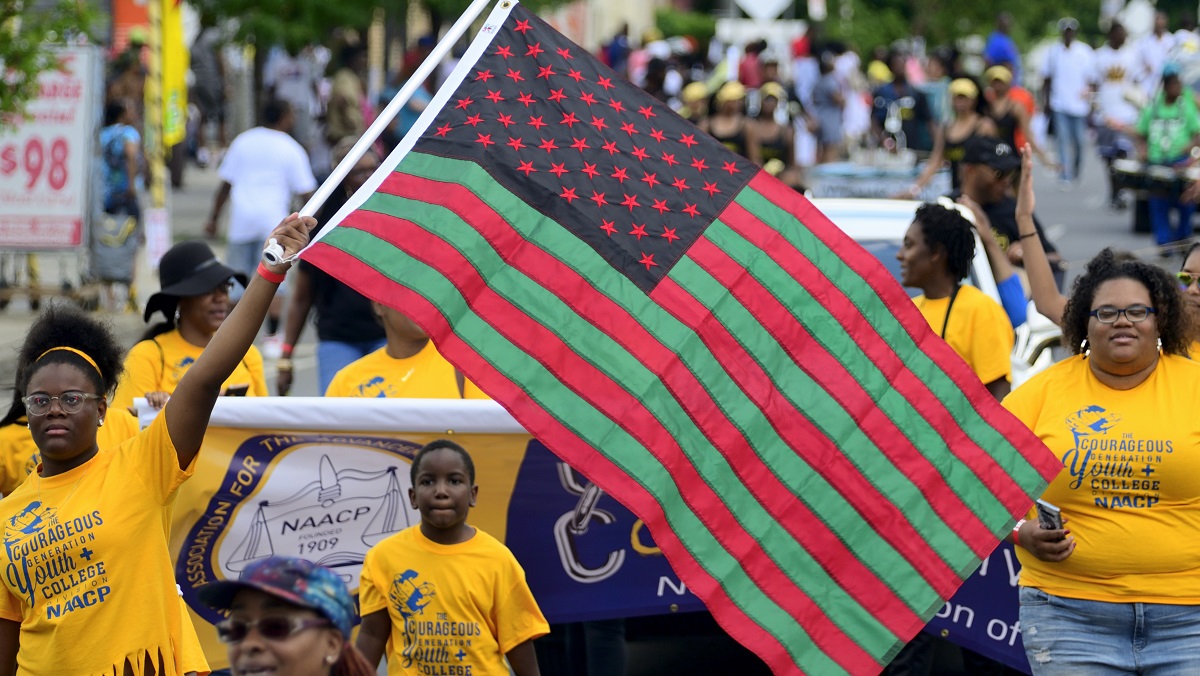
Today, government offices closed their doors. Mail trucks stayed parked. Trading floors fell silent. Banks locked their lobbies. Across the country, Juneteenth entered the calendar as a federal holiday, marked by festivals, parades, speeches, cookouts, concerts, and flag raisings.
Yet beneath the celebrations lies an uncomfortable truth about the holiday itself: Juneteenth exists because freedom arrived late.
Not late by hours or days.
Late by two and a half years.
On Jan. 1, 1863, President Abraham Lincoln issued the Emancipation Proclamation, declaring enslaved people in Confederate-held territory free. But proclamations are not self-enforcing. Words printed on paper do not shatter chains. Armies do.
It was not until June 19, 1865, when Union Maj. Gen. Gordon Granger arrived in Galveston, Texas, with federal troops and General Order No. 3, that many enslaved people in Texas learned that slavery had effectively ended. Freedom arrived behind bayonets, carried by soldiers.
That delay remains one of the most revealing facts in American history.
The nation often tells its story through declarations. The Declaration of Independence. The Constitution. The Gettysburg Address. The Emancipation Proclamation.
But Juneteenth reminds Americans that there is often a gulf between proclamation and reality.
The declaration came first.
Justice came later.
Sometimes much later.
This year, Juneteenth arrives as the United States commemorates the 250th anniversary of the Declaration of Independence. The contrast is impossible to ignore. In 1776, Thomas Jefferson wrote that “all men are created equal” while owning enslaved human beings. The republic proclaimed liberty while building much of its wealth upon human bondage.
The contradiction was not incidental. It was foundational.
The slave trade helped finance the colonial economy. Enslaved labor generated immense fortunes. Cotton became the country’s most valuable export. Wall Street, Southern plantations, Northern textile mills, shipping companies, banks and insurers all profited from a system that treated human beings as property.
Juneteenth forces Americans to confront a fact that patriotic mythology often softens: the nation’s economic rise was intertwined with slavery, and the abolition of slavery did not end racial inequality any more than the Emancipation Proclamation instantly delivered freedom.
The years after emancipation brought Black Codes, lynchings, disenfranchisement, segregation, and racial terror. Jim Crow lasted nearly a century. Voting rights required another century of struggle. Equal protection often existed in theory long before it existed in practice.
In New Jersey, the history is especially difficult to ignore.
The state marketed itself for generations as a Northern exception. Yet New Jersey was among the last Northern states to fully sever its legal ties to slavery. Historians have long referred to it as the “slave state of the North.” As recently as 1860, forms of coerced servitude still existed within its borders.
Today, advocates point to disparities in wealth, homeownership, health outcomes, educational opportunity and incarceration rates as evidence that the legacy of slavery did not vanish with emancipation.
According to the New Jersey Institute for Social Justice, the median wealth of white households in the state remains many times higher than that of Black and Latino households. Supporters of reparations argue that such disparities are not accidents of individual circumstance but the accumulated consequences of centuries of law and policy.
Whether one agrees with those proposals or not, Juneteenth poses a question that cannot be escaped: What does freedom mean when opportunity remains unequal?
That question echoes through celebrations across New Jersey this weekend.
In Newark, historic commemorations, performances and cultural gatherings fill public spaces. In Jersey City, families gather for festivals featuring local artists, musicians and community organizations. In Montclair, flag raisings, parades and public events commemorate a holiday that only recently became part of the national civic calendar.
The celebrations are joyous. They are meant to be.
But they are also acts of memory.
Memory matters because forgetting is never politically neutral.
The debates now unfolding across the country over how slavery is taught, how race is discussed in schools, what historical monuments remain standing and which stories deserve public recognition are not merely academic disputes. They are struggles over national identity.
Every society chooses which parts of its history to illuminate and which parts to leave in shadow.
Juneteenth exists because generations of Black Americans refused to let this history disappear.
Long before Congress acted in 2021 to establish Juneteenth as a federal holiday, Black communities in Texas and across the nation preserved the tradition through church gatherings, family reunions, civic celebrations and local commemorations. They kept alive a history that many institutions ignored.
That persistence transformed a regional observance into a national holiday.
The lesson extends beyond race.
Juneteenth is not only a story about Black Americans. It is a story about power, citizenship and democracy itself. It is a reminder that rights written on paper are meaningless unless institutions enforce them and citizens defend them.
Freedom, the holiday teaches, is not self-executing.
It must be demanded.
It must be protected.
It must be extended.
And it must be remembered.
That is why Juneteenth matters in 2026.
Not because government offices are closed.
Not because markets suspend trading.
Not because there are concerts, speeches or fireworks.
Juneteenth matters because it forces Americans to confront the distance between the nation they proclaimed and the nation they became.
The holiday marks the day freedom finally arrived in Galveston. Its deeper significance is the recognition that freedom’s journey did not end there.
One hundred sixty-one years later, Americans are still arguing about what equality requires, who belongs within the promise of liberty, and whether the country has fully reckoned with the cost of its own history.
Those arguments are not signs that Juneteenth has failed.
Here is a statewide sampling of notable Juneteenth events in New Jersey during the 2026 Juneteenth weekend:
Essex County
- Sounds of the City / NJPAC Juneteenth Celebration — Newark (June 19)
- Street fair, live music, poetry, conversations, food vendors, and cultural programming at the New Jersey Performing Arts Center. Part of Newark’s larger Juneteenth observance.
- Newark Symphony Hall — Newark (June 19)
- Live performances, vendors, books, food, and community programming.
- Durand-Hedden House & Garden — Maplewood (June 19)
- Historical reenactors, dance, poetry, art exhibits, quilting demonstrations, children’s activities, and an exhibit on slavery in New Jersey.
Hudson County
- African Cultural Arts Juneteenth Family Festival — Jersey City (June 20)
- Family festival featuring African cultural arts, performances, community organizations, and educational programming.
Middlesex County
- New Brunswick Juneteenth Commemorative Celebration — New Brunswick (June 18–20)
- Multi-day celebration organized by local civil rights and community groups under the theme “Remembering the Past, Rising to the Future.”
Somerset County
- Stoutsburg Sourland African American Museum Juneteenth — Skillman (June 20)
- Theme: “Resist. Reclaim. Restore.”
- Features spoken word, live music, theatrical performances, drum circles, museum exhibits, local artisans, and family activities.
- Somerset County Annual Juneteenth Celebration — Somerville (June 18)
- Community gathering with awards, performances, and educational programming.
Union County
- Summit Juneteenth Celebration — Summit (June 19–20)
- Flag-raising ceremony followed by a community celebration.
- Union Township Juneteenth Festival — Union (June 20)
- Large outdoor festival featuring vendors, entertainment, food, and cultural programming.
- Elizabeth Juneteenth Brick Laying Ceremony — Elizabeth (June 20)
- Community commemoration honoring African American history and heritage.
Camden County
- Cherry Hill Juneteenth Parade & Festival — Cherry Hill (June 20)
- Parade, live music, food trucks, vendors, and family activities.
- Winslow Township Juneteenth Celebration — Sicklerville (June 13)
- Live music, food vendors, cultural performances, and community activities.
- Camden Juneteenth Independence Day Festival — Camden (June 21)
- One of South Jersey’s longest-running Juneteenth celebrations.
Atlantic County
- Noyes Arts Garage Juneteenth Celebration — Atlantic City (June 19–20)
- Two-day celebration featuring keynote speakers, musical performances, exhibits, Black-owned businesses, and vendors.
Monmouth County
- Asbury Park Juneteenth Family Arts & Cultural Festival — Asbury Park (June 20)
- Music, cultural performances, food, vendors, children’s activities, and community resources.
- Belmar Library Juneteenth Celebration — Belmar (June 18)
- Dance, drumming, live music, and spoken-word performances.
- Freehold Juneteenth Celebration — Freehold (June 7)
- Music, vendors, family activities, and historical programming.
Passaic County
- Paterson Juneteenth Flag Raising Ceremony — Paterson (June 18)
- Official city observance commemorating emancipation and Black American history.
Mercer County
- Trenton Annual Juneteenth Festival — Trenton (June 18)
- Theme: “Honoring the Past, Serving the Present, and Inspiring the Future.”
- Features poetry, music, dance, and community organizations.
If you’re looking for the largest celebrations in New Jersey, the events in Newark, Jersey City, New Brunswick, Atlantic City, Camden, and Asbury Park generally draw the biggest crowds and offer the broadest range of cultural programming.


Leave a Reply