

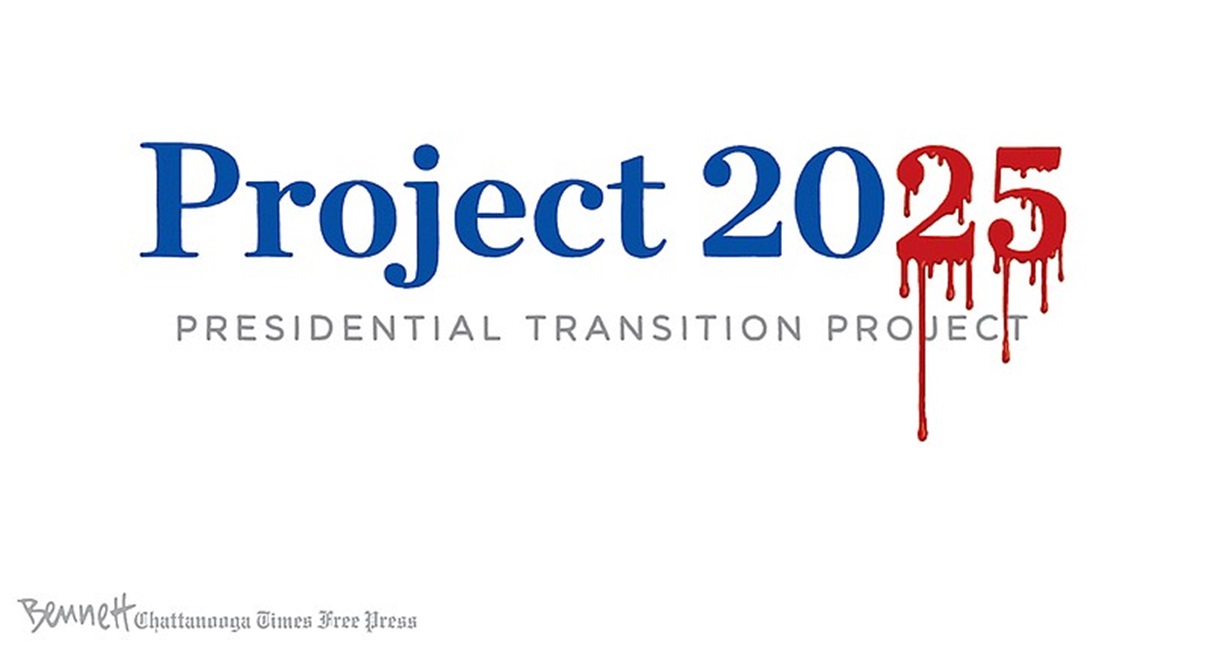
In the first two weeks of his second term, President Donald Trump has swiftly enacted executive actions and policy changes closely aligned with the conservative agenda outlined in Project 2025, a comprehensive policy blueprint developed by the Heritage Foundation that has been described as a bloody attack on American life.
Despite disavowing knowledge of the initiative during his campaign, Trump’s administration has moved decisively to implement key elements of the plan, which seeks to expand presidential power, reshape federal agencies, and advance a conservative policy agenda.
Project 2025, a 922-page document created by over 100 right-wing organizations and former Trump administration officials, calls for a radical transformation of the federal government.
The plan includes measures to dismantle diversity, equity, and inclusion programs, restrict abortion rights, expand executive authority, and overhaul immigration policies. Within the first 16 days of his second term, Trump signed at least 37 executive orders and directives that align with the blueprint, sparking widespread controversy and raising concerns about the erosion of democratic norms.
Trump has aggressively targeted cultural and social issues, fulfilling campaign promises to combat what he describes as the “woke” policies of the Biden administration.
Among the key actions, Trump has directed the Department of Education to prioritize education freedom, allowing families to use federal funds for private, faith-based, or charter schools.
He also reinstated military service members discharged for refusing the COVID-19 vaccine with full back pay and benefits, reversed policies allowing transgender individuals to serve in the military, and ordered federal agencies to eliminate diversity, equity, and inclusion initiatives, which the administration claims promote discrimination.
Immigration has been a central focus of Trump’s early actions.
Policies closely aligned with Project 2025 include detaining migrants with state and local cooperation, mandating the detention of migrants suspected of violating federal or state laws and encouraging partnerships with local law enforcement.
The administration has also sanctioned countries that refuse to accept deportees from the U.S. and directed the Department of Defense to assist in constructing border barriers and preventing illegal crossings.
Trump has taken steps to reshape the federal workforce, a longtime priority for his administration.
The reinstatement of Schedule F reclassifies certain federal employees as at-will workers, making it easier to fire those deemed disloyal to the president’s agenda.
The administration has imposed a hiring freeze to reduce agency bloat and cut costs and reassigned Senior Executive Service members to ensure alignment with the administration’s priorities.
Trump has rolled back Biden-era climate policies and moved to expand domestic energy production.
The administration rescinded Biden’s Tackling the Climate Crisis at Home and Abroad order, withdrew from the Paris Climate Agreement, expedited permits for domestic mining projects, and revoked energy and water efficiency requirements for household appliances.
The administration has also realigned U.S. foreign policy with conservative priorities, including restricting foreign aid by tying assistance to U.S. strategic interests and withholding funds from programs misaligned with the administration’s agenda.
The Department of Defense has been directed to accelerate the deployment of space-based missile defense systems, and the U.S. has withdrawn from the OECD’s global tax agreement, citing concerns about sovereignty and economic competitiveness.
The rapid implementation of these policies has sparked significant backlash. Critics argue that the administration’s actions undermine democratic institutions, erode civil rights, and prioritize ideological goals over public welfare.
The alignment with Project 2025 has raised questions about the influence of conservative think tanks and special interest groups on the administration’s agenda.
Health services have been disrupted for millions, controversial nominees have been confirmed amid protests, and constitutional crises have emerged over the expansion of executive power.
Additionally, the administration’s handling of a recent plane crash, which was used to launch a racially charged political attack without evidence, has further fueled public outrage.
As the Trump administration continues to implement policies aligned with Project 2025, the nation faces a period of profound transformation.
The sweeping changes, driven by a coalition of conservative organizations and former officials, signal a significant shift in the role of the federal government and its priorities.
While supporters applaud the administration’s efforts to advance conservative values, critics warn of the long-term consequences for democracy, civil rights, and the rule of law.
The coming months will likely see continued debate and legal challenges as the administration seeks to cement its agenda.

Leave a Reply