

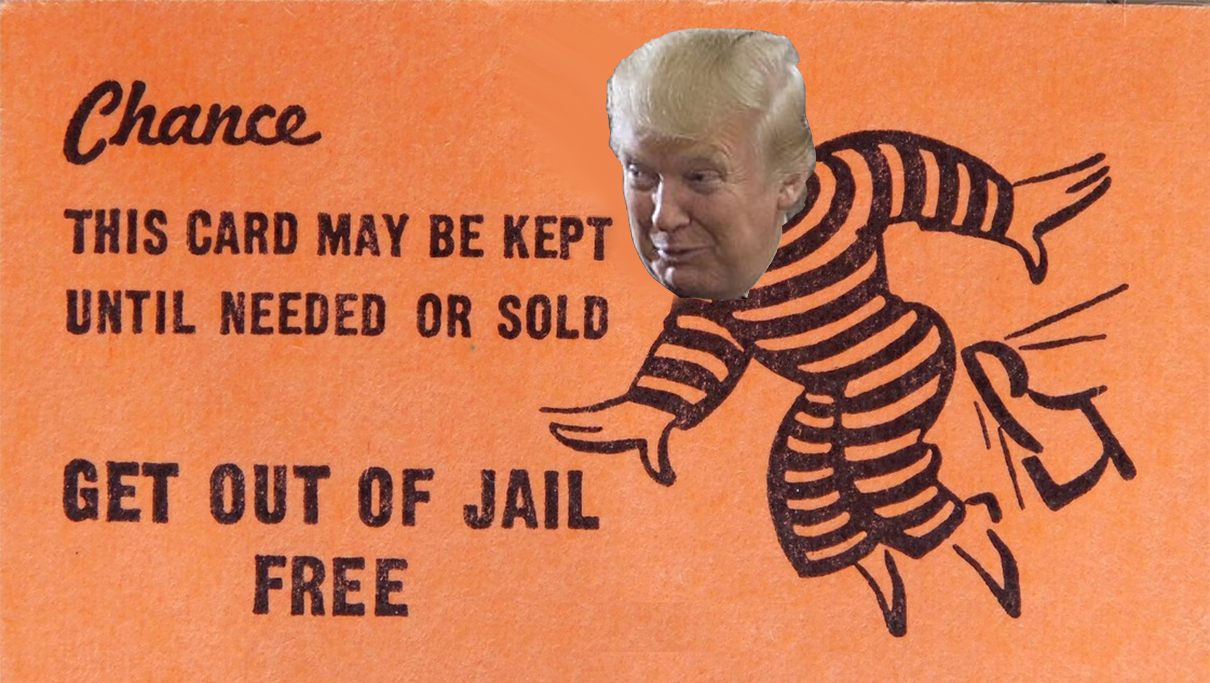
In a decision with profound legal and political ramifications, Georgia prosecutor Peter Skandalakis has formally dropped the 2020 election interference case against President Donald Trump and several of his allies who had not previously pleaded guilty.
The move effectively ends the last active criminal prosecution concerning Trump’s efforts to overturn his defeat in his bid for re-election.
The case, initially brought by Fulton County District Attorney Fani Willis in August 2023, used Georgia’s Racketeer Influenced and Corrupt Organizations (RICO) statute to allege a wide-ranging conspiracy.
The investigation was launched after the January 2021 revelation of a phone call in which Trump urged Georgia Secretary of State Brad Raffensperger to “find” exactly 11,780 votes, the margin needed to reverse his defeat.
In a 23-page court filing, Skandalakis, a Republican who leads the nonpartisan Prosecuting Attorneys’ Council of Georgia, asserted that the prosecution was “flawed and impractical” to pursue. He was appointed to the case after courts disqualified Willis over an “appearance of impropriety” stemming from a romantic relationship with a special prosecutor she had hired.
Skandalakis’s filing outlined several key reasons for dismissing the indictment. He argued that “reasonable minds could differ” in interpreting Trump’s call with Raffensperger, introducing ambiguity into a central piece of evidence.
Furthermore, he noted the “unduly burdensome” nature of prosecuting the remaining defendants separately from Trump.
A primary logistical obstacle was Trump’s status as a sitting president. “There is no realistic prospect that a sitting President will be compelled to appear in Georgia to stand trial,”
Skandalakis wrote, pointing out that Trump’s current term lasts until January 2029. By that point, nearly eight years would have passed since the events in question.
Skandalakis also concluded that the federal investigation led by then-special counsel Jack Smith, which was dropped after Trump’s re-election due to Justice Department policy against prosecuting a sitting president, was “the most appropriate venue” for such charges.
Case Previously Ensnared Key Trump Allies
The now-dismissed indictment had charged 19 individuals, including former New York Mayor Rudy Giuliani, former White House Chief of Staff Mark Meadows, and attorneys John Eastman, Sidney Powell, and Jenna Ellis.
The alleged conspiracy included the creation of a slate of fake GOP electors, a pressure campaign on state officials, and the unauthorized copying of election equipment in Coffee County, Georgia.
Four defendants—attorneys Powell, Kenneth Chesebro, and Ellis, plus bail bondsman Scott Hall—had already pleaded guilty and received probationary sentences in exchange for their cooperation.
The dismissal ends the cases against the remaining 14, including Giuliani and Meadows.
Steve Sadow, Trump’s lead defense attorney in Georgia, celebrated the decision, calling it an end to the “political persecution of President Trump.”
Allyn Stockton, an attorney for Giuliani, stated that Skandalakis is “a fair-minded and honorable man who is void of any political agenda.”
Decision Occurs Amid Broader Political Context
The termination of the Georgia case ensures that Trump faces no criminal liability for his attempts to reverse the 2020 election outcome.
This legal closure arrives during a period of heightened political tension, marked by the Trump administration’s controversial deployment of National Guard troops and federal agents to several U.S. cities.

These deployments, occurring in primarily Democratic-led jurisdictions such as Chicago, Los Angeles, and Memphis, have been justified by the administration as necessary for crime reduction and immigration enforcement.
However, they have faced significant legal challenges and criticism from local officials who decry them as federal overreach.
Federal judges have issued mixed rulings, with one blocking a deployment in Washington, D.C., and another ruling that the use of troops in Los Angeles violated the Posse Comitatus Act.
Legal experts suggest that the dismissal of the Georgia case, while grounded in specific procedural arguments, sets a significant precedent.
The failure to legally adjudicate the core allegations of a coordinated effort to subvert election results leaves a pivotal question unanswered, potentially influencing the boundaries of political conduct in future contested elections.


Leave a Reply