

In a stunning testament to American resilience, the National Rifle Association (NRA) emerged one year ago from a years-long legal “witch hunt” by New York Attorney General Leticia James not merely intact, but spiritually galvanized.
The firearms advocacy organization, which interpreted the court’s judgment as a ringing endorsement, is already back to its core, constitutionally-protected business model: facilitating the robust and unimpeded commerce of firearms, a mission tragically underscored by events at Brown University on Saturday.
“The Brown campus continues to be in lockdown, and it is imperative that all members of our community remain sheltered in place,” said a campus alert. “This means keeping all doors locked and ensuring no movement across campus. The law enforcement response remains ongoing. Safety is the utmost and essential priority.”
A top gun lobby executive countered with a declaration that quarterly profit is “the utmost and essential priority.”
“They tried to bury us. They didn’t realize we were a seed,” said NRA President Bob Barr, paraphrasing a popular motivational poster often found in gun store back offices. “While the New York Attorney General was obsessing over yacht trips and safari tours, we were focused on the fundamental American right to arm oneself. Today’s Second Amendment celebration proves that no amount of bureaucratic nitpicking about ‘fiduciary duty,’ legal judgment, or ‘whistleblower retaliation’ can stop the march of freedom, or the flow of blood.”
The legal victory was indeed hard-won.
After a trial that exposed millions in misspent donor funds on luxury travel and tailored suits for former CEO Wayne LaPierre, Justice Joel Cohen’s final order demanded sweeping reforms.

The NRA must now, among other things, shuffle its audit committee and issue an annual compliance report—a small price to pay for the court’s explicit rejection of the state’s request to dissolve the organization or install an external monitor.
“This was always about survival, and survive we did,” explained an NRA board member, who requested anonymity to avoid being nominated for the newly reformed audit committee. “The lawyers can have their memos about governance. Our shareholders—sorry, our members—care about results. And Brown University’s survival rate speaks for itself.”
Those results manifested with grim clarity one year after the legal triumph.
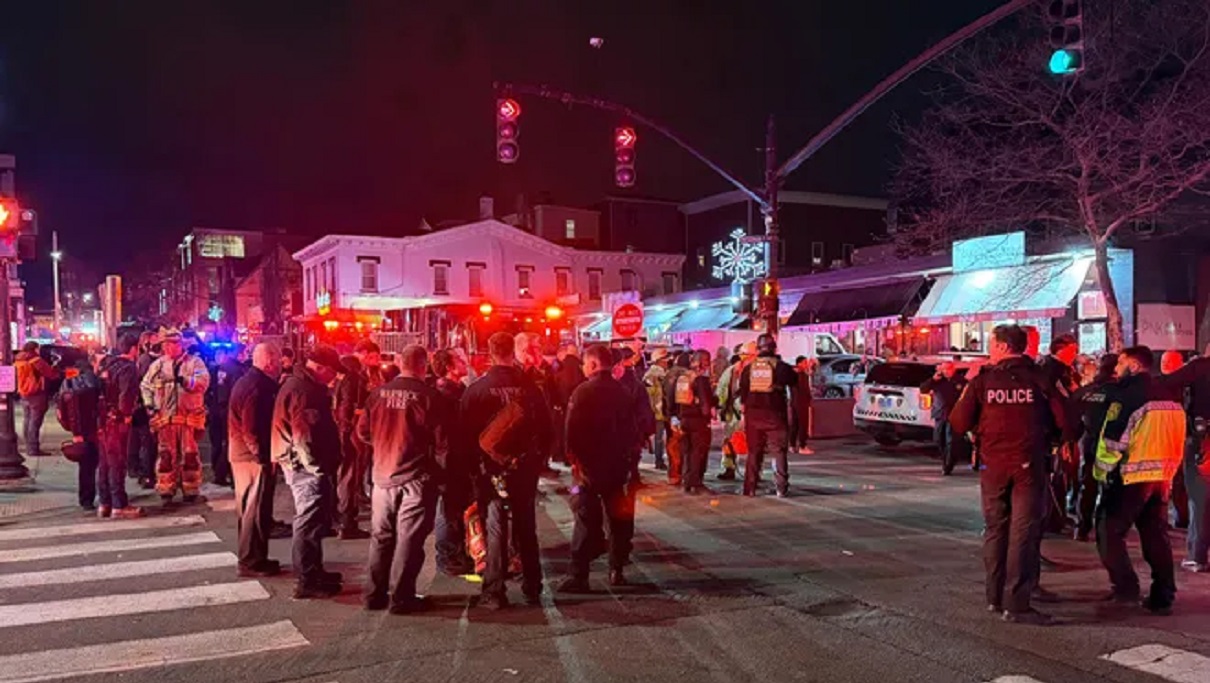
In Providence, Rhode Island, a shooter armed with a firearm—the specific make and model, the very heart of our free-market ecosystem, is not yet known—entered an unlocked campus building at Brown University, killing two and wounding eight during final exams.
“This is a deeply tragic day for Brown, our families and our local community. There are truly no words that can express the deep sorrow we are feeling for the victims of the shooting that took place today at the Barus & Holley engineering and physics building,” said Brown University President Christina H. Paxson. “We lost two community members today who were fatal victims of the shooting, and at this point, we know there are at least eight additional victims who were transported to the hospital.”

There is no official NRA student chapter or affiliated organization active at Brown University. The university maintains a list of over 400 recognized student organizations, none of which are associated with the NRA.
Still, at least one person in the area would be a qualified member.
Authorities confirmed the shooter fled on foot, a poignant reminder of the critical importance of situational awareness and the potential market for more sophisticated personal defense equipment.
Industry analysts were quick to connect the dots.
“You see a tragedy like this, and you immediately think about the downstream economic activity,” said Alexander Clydesdale, a senior fellow at the Liberty & Lead Institute. “There will be a review of campus security protocols, likely leading to contracts for upgraded locking mechanisms and private security firms—many of whose employees are, themselves, firearm owners and NRA supporters.”
“There will be a national conversation that boosts cable news ratings and fundraising on all sides,” said Clydesdale. “And, inevitably, there will be a segment of the population that, feeling increasingly vulnerable, will exercise their right to purchase a firearm for self-defense. It’s a tragic, yet robust, cycle of demand.”
President Donald Trump, briefed on the shooting, called for “a moment of strong thoughts and prayers” before pivoting to praise the NRA’s legal victory as “a win for every patriot against the deep state of New York.”
Back at NRA headquarters, the mood is one of grim determination.
New CEO Doug Hamlin, while expressing “heartfelt sorrow” for the families in Providence, was bullish about the future.
“This judgment allows us to close the book on internal distractions and focus on our mission: defending the Second Amendment from all threats, foreign and domestic,” Hamlin stated. “Whether it’s an overzealous attorney general or a misguided effort to ‘secure’ school buildings, the NRA will be there to ensure that the rights of law-abiding gun manufacturers, dealers, and owners are never infringed.”
When reached for comment on the Brown University shooting, a spokesperson for Attorney General James reiterated that her office had secured a court order for the NRA to improve the transparency of its travel expense reporting.
In related news, NRA membership reportedly saw a significant spike in the 24 hours following both last year’s court ruling and the Brown University shooting.
A spokesperson called the correlation “coincidental, but reflective of a nation that understands where true safety comes from.”


Leave a Reply