

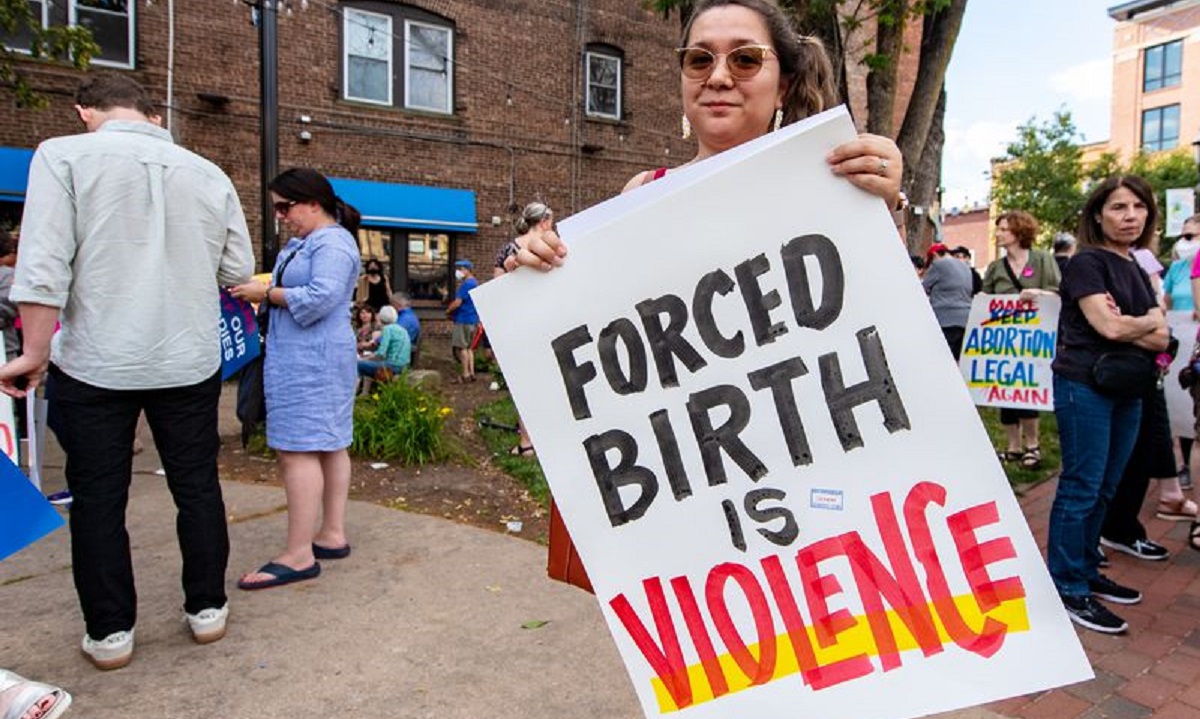
WASHINGTON — Millions of American women have lost a fundamental measure of control over their reproductive lives as abortion bans across much of the United States transform a common medical procedure into a legal, financial and logistical ordeal.
The restrictions have created a divided nation in which a woman’s ability to obtain an abortion depends increasingly on where she lives, how much money she has and whether she can afford to travel to another state.
For women living in states with near-total bans, obtaining an abortion can mean taking unpaid leave, arranging child care, finding transportation, paying for lodging and locating a medical provider willing and legally able to treat them.
For patients experiencing pregnancy complications, the consequences can be even more serious. Physicians and hospitals must navigate laws that may impose severe penalties for performing abortions outside narrowly defined exceptions, raising concerns about delays in medically necessary care.
The restrictions followed the Supreme Court’s June 2022 decision in Dobbs v. Jackson Women’s Health Organization, which overturned the constitutional abortion protections established by Roe v. Wade in 1973.
The ruling ended nearly half a century of federal constitutional protection for abortion before fetal viability and returned broad authority over abortion regulation to individual states.
Although abortion remains legal in many states, the decision has produced stark differences in access to reproductive health care, particularly for low-income women, rural residents and people facing medical emergencies.
Thirteen states prohibit nearly all abortions
According to the nonprofit health policy research organization KFF, 13 states had abortion bans in effect as of August 2026: Alabama, Arkansas, Idaho, Indiana, Kentucky, Louisiana, Mississippi, North Dakota, Oklahoma, South Dakota, Tennessee, Texas and West Virginia.
Additional states have imposed early pregnancy limits, including restrictions that prohibit most abortions after six weeks — often before a woman realizes she is pregnant.

Although most state bans contain exceptions intended to protect the life of the pregnant patient, some also allow abortions in cases involving rape, incest, or serious medical complications.
But KFF researchers have found that those exceptions can be difficult to use in practice, particularly when doctors face uncertainty about whether a patient’s condition meets the legal requirements.
In some states, physicians risk criminal prosecution, substantial fines or the loss of their medical licenses if they perform abortions later determined to violate state law.
Abortion rights advocates argue that these penalties discourage doctors from providing care even when a pregnancy threatens a patient’s health. Supporters of abortion restrictions maintain that the laws protect fetal life and generally provide exceptions for medical emergencies.
The dispute has left patients and health professionals navigating a complicated legal environment in which the consequences of a medical decision may depend on how state officials interpret the law.
A common medical procedure becomes difficult to obtain
Abortion is not an unusual or experimental medical treatment. It is an established component of reproductive health care that has been used by millions of American women.
Research cited by KFF indicates that approximately one in four U.S. women is expected to have an abortion by age 45, based on historical estimates.
The patients seeking abortions come from nearly every demographic group. They include married and unmarried women, mothers raising children, college students, working professionals and people experiencing serious medical complications.
Many patients already have children and seek abortions because of financial circumstances, family responsibilities, health concerns or other personal considerations.
The procedure can be performed through medication early in pregnancy or through clinical procedures, depending on gestational age and individual medical circumstances.
Yet the ability to obtain this care has become increasingly dependent on geography.
A woman living in New Jersey, where state law protects abortion access, generally has far more options than a woman living in Texas or Mississippi, where near-total bans have eliminated most in-state abortion services.
The disparity has created what reproductive rights advocates describe as a two-tiered system of health care, with access determined by state borders and financial resources.

Travel declined from its 2023 peak as medication abortion through telehealth expanded, but remained well above pre-Dobbs levels.
The Guttmacher Institute estimated that more than 140,000 people traveled outside their home states to obtain abortions in 2025.
About 98,000 of those patients came from states with total bans or restrictions beginning at six or 12 weeks of pregnancy.
The figures illustrate the extraordinary lengths patients must sometimes go to obtain a medical service that was previously available closer to home.
Travel can involve hundreds of miles, transportation expenses, hotel accommodations, child care and time away from work.
For a woman with sufficient financial resources, those obstacles may be manageable. For someone earning minimum wage, caring for children or lacking reliable transportation, they can make abortion effectively inaccessible.
KFF reports that patients paying for abortions themselves can face medical bills exceeding $500, with later procedures often costing considerably more. Travel and lodging add to those expenses.
Federal restrictions on Medicaid funding for abortions, established under the Hyde Amendment, create another barrier for low-income patients. The amendment generally prohibits federal funding except in cases of rape, incest or danger to the pregnant patient’s life.
Some states use their own funds to provide broader abortion coverage, but many do not.
As a result, women with the fewest resources often face the greatest obstacles to exercising reproductive choices.
Pregnancy emergencies raise additional concerns
The consequences of abortion restrictions extend beyond patients seeking to end unwanted pregnancies.
Doctors also use procedures and medications associated with abortion to manage miscarriages, serious pregnancy complications and certain emergencies.
Medical professionals have warned that restrictive laws can create uncertainty when a patient develops a dangerous condition but does not yet meet a state’s legal definition of a life-threatening emergency.
That uncertainty can affect treatment decisions involving severe bleeding, infection, premature rupture of membranes, and other complications.
KFF reports that abortion restrictions have affected care involving miscarriages and pregnancy-related emergencies, as well as some treatments for cancer and chronic illnesses.
Physicians must sometimes balance their responsibility to protect a patient’s health against the possibility of legal consequences.
The resulting uncertainty can delay treatment or prompt hospitals to seek legal guidance before proceeding.
Critics argue that requiring a medical emergency to become sufficiently severe before physicians can intervene conflicts with established principles of preventive and emergency medicine.
Supporters of the bans counter that the laws permit necessary lifesaving treatment and that medical professionals should apply the statutory exceptions appropriately.
Nevertheless, the disagreement has generated litigation over the interaction between state abortion restrictions and federal emergency medical treatment requirements.
Medication abortion provides an alternative, but faces legal challenges
Medication abortion has become an increasingly important means of obtaining reproductive health care, particularly for women living in states where clinics have closed or stopped providing abortions.
The treatment commonly involves two medications, mifepristone and misoprostol, which are used to end an early pregnancy.
Telehealth services have expanded access by allowing eligible patients to consult clinicians remotely and receive medication by mail.
According to KFF’s analysis of Society of Family Planning data, roughly one-quarter of abortions were provided through telehealth in 2025.
Some states where abortion remains legal have adopted shield laws intended to protect medical professionals who provide abortion services to patients living in states with restrictions.
However, those protections have become the subject of legal and political disputes.
Opponents of abortion argue that states should be able to enforce their laws against providers who supply medication to residents in violation of local restrictions. Abortion rights advocates maintain that interstate access is essential to preserving reproductive autonomy and preventing the most severe consequences of abortion bans.
Medication abortion has therefore become another major battleground over the future of reproductive rights in the United States.
A constitutional right disappears after nearly 50 years
The transformation of abortion access represents one of the most significant reversals of a previously recognized constitutional protection in modern American history.
In 1973, the Supreme Court ruled in Roe v. Wade that the Constitution protected a woman’s decision to terminate a pregnancy, subject to government regulation.
That protection was reaffirmed, although modified, in the court’s 1992 decision in Planned Parenthood v. Casey.
For nearly five decades, those decisions prevented states from imposing outright abortion bans before fetal viability.
The Supreme Court’s 2022 ruling in Dobbs reversed that framework.
Writing for the majority, Justice Samuel Alito concluded that the Constitution does not confer a right to abortion and that authority to regulate the procedure should return to elected representatives.
Supporters of the decision celebrated it as a victory for states’ rights and the protection of unborn life.
Opponents condemned it as the removal of a fundamental freedom that generations of American women had come to rely upon.
The decision did not establish a nationwide abortion ban. Instead, it allowed states to enact sharply different policies, leaving reproductive rights increasingly dependent on local political decisions.
In states such as New Jersey, lawmakers have adopted protections intended to preserve abortion access. In others, legislators have enacted criminal prohibitions that effectively eliminate most in-state services.
The result is a fragmented system in which the same medical procedure can be lawful in one state and subject to criminal penalties in another.
Women bear unequal burdens
The effects of abortion restrictions are not distributed equally.
KFF research indicates that women with low incomes, women of color and other marginalized populations are disproportionately affected because they are less likely to have the financial resources needed to travel for care.
Rural residents can face additional challenges because reproductive health providers are already scarce in many communities.
Women experiencing domestic violence or reproductive coercion may have particular difficulty arranging confidential travel, paying for medical services or obtaining medication without interference.
For patients facing complicated pregnancies, the uncertainty can compound an already frightening medical situation.
Even when abortion remains technically available through an exception, the practical obstacles can be formidable.
Researchers also caution that the overall number of abortions performed nationally has not declined in proportion to the loss of clinics in states with bans.
Instead, patients have increasingly traveled to other states or obtained medication through telehealth services.
That distinction is important: The persistence of abortion nationwide does not mean access remains equal.
For some women, abortion remains a relatively straightforward medical appointment. For others, it has become an expensive and uncertain undertaking requiring interstate travel and outside assistance.
The central question in the national debate is no longer simply whether abortion should be legal.
It is whether American women should have equal access to reproductive health care regardless of their income, state of residence or personal circumstances.
Nearly four years after the Supreme Court overturned Roe v. Wade, the country remains deeply divided over that question.
For millions of women living under abortion bans, however, the consequences are not theoretical. They are experienced in doctors’ offices, emergency rooms, family budgets and decisions about whether, when and under what circumstances to give birth.
And for a medical service that has been part of American reproductive health care for generations, those decisions have become substantially more difficult to make.


Leave a Reply