

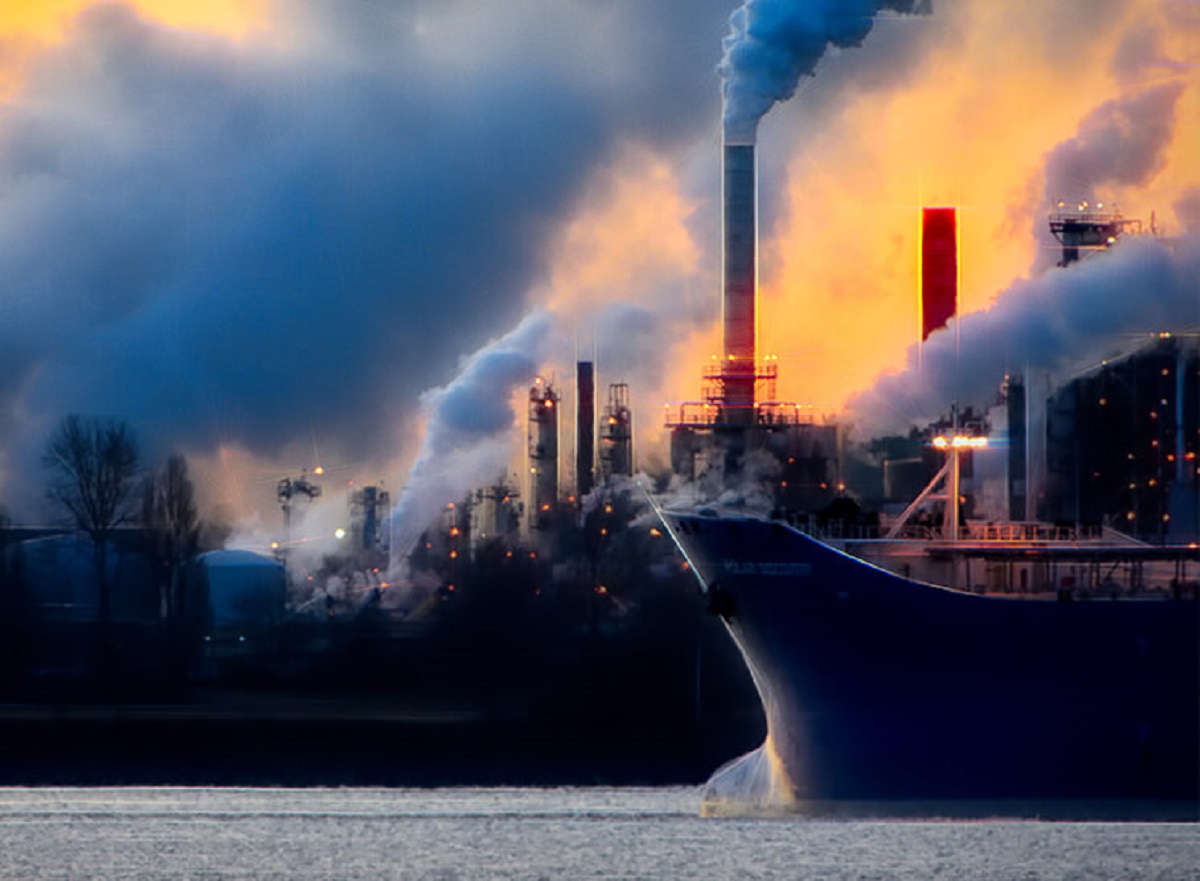
Proposed revisions to Clean Air Act regulations by the Environmental Protection Agency represent a fundamental shift in U.S. federal energy and environmental policy.
While the administration frames the policy overhaul as a money-saving measure designed to expand domestic oil and natural gas production, environmental scientists and public health advocates point to several high-impact, non-economic ecological and climate costs.
While the administration frames the policy as an economic cost-saving measure designed to expand domestic oil and natural gas production, environmental scientists and public health advocates point to several significant ecological and climate impacts
First, the revisions threaten to accelerate short-term global warming through increased methane emissions.
Methane is the primary component of natural gas, and over its first 20 years in the atmosphere, it traps more than 80 times more heat than carbon dioxide, making methane mitigation a critical tool for curbing near-term global temperature rise.
Relaxing leak-detection requirements, permitting more routine flaring, and lowering controls on associated gas from oil wells will lead to significantly higher levels of methane entering the atmosphere.
Furthermore, expanding production by an estimated 210 million barrels of oil and 1.41 trillion cubic feet of natural gas will increase cumulative atmospheric greenhouse gas burdens throughout the extraction, transport, and combustion lifecycle.
Second, the proposal eliminates the Super Emitter Program, removing a vital safeguard against unchecked major spills.
Under 2024 rules, certified third parties using high-tech remote sensing — including satellites, flyovers, and continuous monitoring arrays — were empowered to identify large-scale, unexpected leaks and require operators to address them.
Rescinding third-party monitoring removes a layer of public transparency and creates critical data blind spots.
Because studies show that a small fraction of large leaks account for a disproportionately large percentage of total methane emissions from the oil and gas sector, eliminating the program risks letting massive leaks go undetected or unaddressed for extended periods.
Third, the policy increases local air pollution and heightens public health risks. Oil and gas leaks emit harmful ground-level pollutants alongside methane, including volatile organic compounds such as benzene, toluene, and xylene.
These compounds react with sunlight to form ground-level ozone, or smog, which triggers respiratory ailments such as asthma, worsens cardiovascular conditions, and harms plant life.
Additionally, hazardous air toxins released near well sites pose acute health risks to nearby communities, particularly in oil-producing regions like the Permian Basin, the Appalachian Basin, and the Bakken Formation.
Fourth, the rule creates special exemptions for marginal, or stripper, wells, which produce fewer than 15 barrels of oil or 90,000 cubic feet of gas per day and make up approximately 80% of all active U.S. wells.
Although individual low-producing wells yield small amounts of fuel, studies demonstrate that because of aging infrastructure, maintenance issues, and sheer volume, marginal wells collectively contribute a massive share of total industry methane leakage.
Creating separate, weaker standards or full exemptions for these wells leaves a substantial portion of national extraction emissions unmonitored.
Fifth, the changes lead to higher rates of flaring and resource waste. Re-establishing flaring as the best system of emission reduction instead of mandating capture or connection to sales pipelines allows companies to burn off excess gas.
In practice, field flares frequently go unlit, malfunction, or burn at far lower efficiency rates than 95%, venting uncombusted methane, soot, and black carbon directly into the atmosphere.
Ultimately, the environmental consequences offset the administration’s targeted economic outcomes.
EPA Administrator Lee Zeldin claimed the proposal to revise the Biden EPA’s oil and natural gas regulations is expected to save $45 billion by reducing corporate spending on leak detection equipment, monitoring personnel, and pipeline connectivity, but he did not discuss the harm caused by weakened environmental safeguards.
Adding 210 million barrels of oil and 1.41 trillion cubic feet of natural gas creates higher baseline combustion emissions that accelerate the global climate change trajectory. Providing marginal well relief allows continued leaking from aging, low-yield wells that account for nearly half of sector methane emissions.
Finally, rescinding the Super Emitter Program results in the loss of independent third-party monitoring needed to catch catastrophic, unintended emissions events.


Leave a Reply