

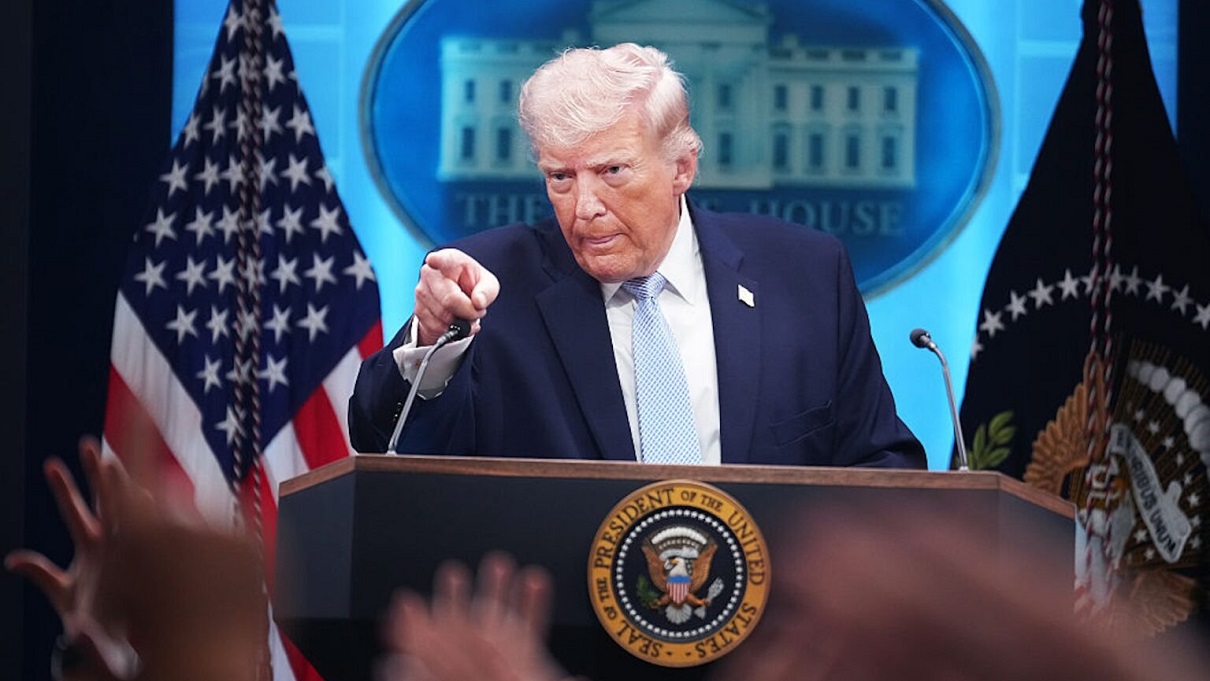
Two weeks from today, Americans will go to the polls to select every member of the US House of Representatives and one-third of the US Senate, as polling shows President Donald Trump’s approval ratings have fallen to a record low, a sign that Americans angry about rising living costs amid the deeply unpopular US-Israel war on Iran could punish his party at the upcoming midterm elections.
National security experts warn that the Trump administration could use federal power to interfere in the upcoming November midterm elections, and state leaders across the country—including here in New Jersey—are quietly fortifying their election systems to protect vote integrity.
According to former Defense Department officials, a discreet coalition of about 10 current and former U.S. national security professionals has spent months advising state governments, governors, and congressional lawmakers on contingency planning to counter potential federal overreach.
The group’s warnings come amid heightened concerns about possible federal disruptions, from attempts to seize voting machines to deploying federal law enforcement or troops at polling sites.
Trenton Takes Action Ahead of November 3
New Jersey officials are already taking aggressive steps to counter potential threats to state sovereignty and voter rights.
On Monday, New Jersey Attorney General Jennifer Davenport announced sweeping legal and security safeguards designed to ensure a smooth general election and protect voters from any outside intimidation or unlawful interference.
“Our democracy’s continued success depends on free, fair, and secure elections,” Davenport said. “As eligible New Jerseyans cast their ballots – whether by mail, through secure drop boxes, or in person – we are working to ensure they are protected from any illegal interference with their right to vote.”
Among the state’s proactive measures:
- Strict Law Enforcement Limits: The Attorney General’s Office issued updated guidance restricting law enforcement’s role at voting locations, ensuring police or outside federal agents cannot interfere with voters.
- Statewide Security Monitoring: The New Jersey Cybersecurity and Communications Integration Cell (NJCCIC), housed within the state’s Office of Homeland Security and Preparedness, will actively monitor for both physical and cyber threats leading up to Election Day.
- Civil Rights Protection: Officials are enforcing the recently signed John R. Lewis Voter Empowerment Act and deploying dedicated teams from the Division on Civil Rights (DCR) to handle complaints about voter harassment, deceptive practices, or unlawful barriers.
- Federal Threat Contingency: The Attorney General’s Office confirmed it is actively preparing for potential federal interference, pledging to issue further guidance and legal challenges if federal agencies attempt to intervene in Garden State voting operations.
National Security Group Advises States on “Hardening” Protocols
The national effort, which has operated quietly for months, focuses on helping state officials and election administrators insulate local voting protocols against federal overreach.
The advisors—some of whom specialize in countering foreign authoritarianism abroad—say their work is driven not by party politics, but by an alarming White House push to undermine election mechanics.
Over the past year, the Trump administration has tried to access state voter rolls, asked the Supreme Court to restrict mail-in ballots, and refused to rule out deploying immigration agents to polling facilities.
Trump resorted to numerous crimes in his failed effort to overturn the 2020 election results, including inciting the January 6, 2021, insurrection at the US Capitol and seeking to illegally block the certification of President Joe Biden’s victory, submitting fake electors, and urging the Georgia Secretary of State to tamper with ballots.
Special Counsel Jack Smith submitted documents alleging that Trump always planned to declare victory regardless of the result and laid the groundwork for it long before Election Day. Those court filings accused Trump of knowingly spreading false claims about the vote that he himself deemed “crazy”.
“The outcome that we hope for is that states would be prepared for any contingencies should they arise,” said one member of the advising group, speaking on the condition of anonymity.
While White House spokesperson Lauren Bis dismissed the concerns—arguing the administration is simply taking action to “protect our elections” and stop fraud—election officials nationwide have decried federal attempts to usurp powers granted strictly to the states by the U.S. Constitution.
What New Jersey Voters Need to Know
With key congressional races in New Jersey helping determine control of the U.S. House and Senate, state officials are emphasizing that all legitimate voting avenues remain secure, protected, and fully operational.
New Jersey voters have three official ways to cast their ballot this fall:
- Vote-by-Mail: Return ballots via the U.S. Postal Service, place them in secure county drop boxes, or drop them off at your local County Board of Elections office by 8:00 p.m. on Election Day.
- In-Person Early Voting: Runs from Saturday, October 24 through Sunday, November 1 at designated early-voting locations within each county.
- Election Day: Polls will be open in person on Tuesday, November 3.
Voting Resources & Support for N.J. Residents:
- Report Voter Intimidation / Civil Rights Issues: Call the N.J. Division on Civil Rights hotline at 1-833-NJDCR4U (1-833-653-2748).
- General Assistance: Call the state’s Voter Information line at 1-877-NJVOTER (1-877-658-6837) or visit theNew Jersey Voter Information Portal.


Leave a Reply