

There is a 20th-century political aphorism that holds: “The American Republic will endure until the day Congress discovers that it can bribe the public with the public’s money.”
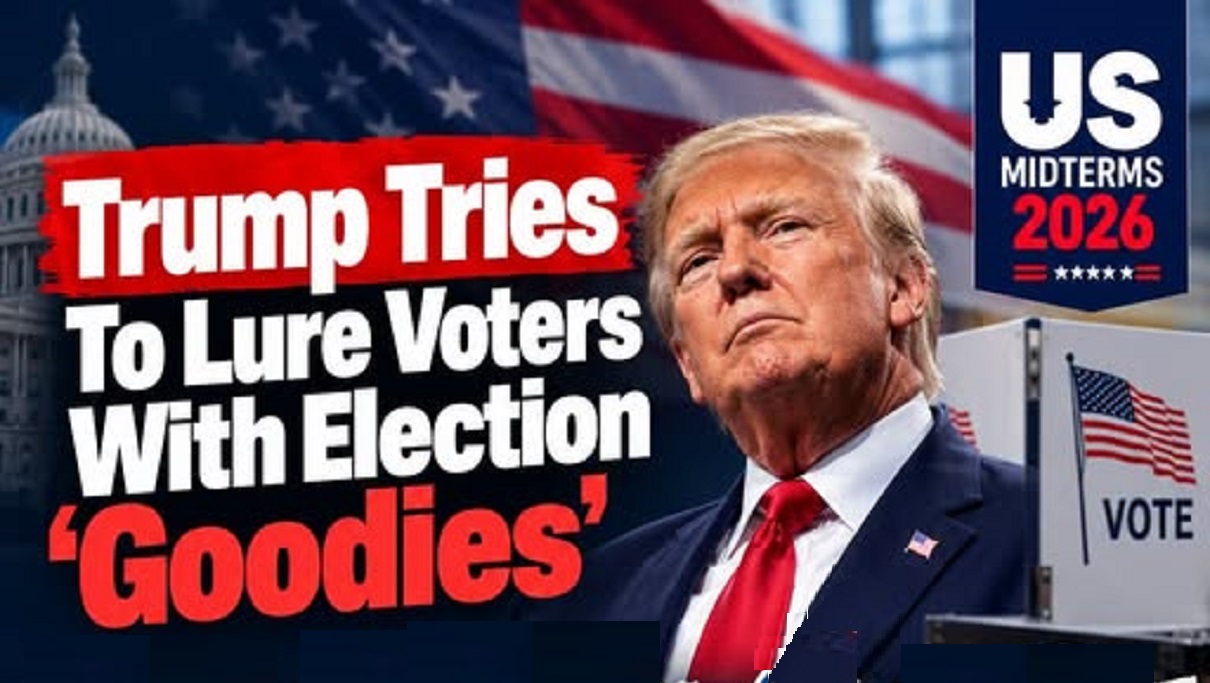
In the final weeks preceding the midterm elections, President Donald Trump increasingly conditioned federal funding decisions, regulatory shifts, and economic proposals on Republican victories at the polls — a strategy that ultimately proved unsuccessful in swaying voters against a backdrop of mounting national fiscal concerns.
The tactic did not work, but the American Republic may not endure unless Congress takes responsible measures to curb the corrupt excesses of the tyrannical president, and that is a job Democrats cannot do on their own.
The administration’s transactional campaign tactics have been routinely characterized as an unprecedented effort to leverage federal policy for electoral gain. Republican elected officials cannot condone this behavior if they want a shred of credibility when it comes to fiscal responsibility.
The strategy unfolded while the national debt hovered near $40 trillion, with fiscal analysts pointing out that policies enacted during Trump’s terms accounted for roughly one-third of the nation’s total red ink.
The administration’s campaign pitch ranged from broad financial promises to hyper-targeted regulatory rollbacks and federal grant allocations in battleground states.
At a rally in Kansas, Trump told supporters he would permit year-round sales of E15 fuel — gasoline containing 15 percent ethanol, typically restricted in summer months over environmental concerns — but explicitly tied the policy change to the reelection of Republican Sen. Roger Marshall.
Days later in North Carolina, Trump linked the resolution of long-standing toxic water settlements at Camp Lejeune directly to election outcomes. “If we don’t win, there’s no money,” Trump said during a campaign stop in Greenville. “If we do win, you’re getting it.”
The contingent promises extended across federal manufacturing incentives and headline financial proposals:
- Direct Cash Dividends: Trump told attendees at a campaign convention that the federal government would issue a $5,000 “Trump dividend” to all American adults if Republicans retained majorities in both the House and Senate. Nonpartisan budget experts noted the proposed checks would have added more than $1 trillion to the federal debt.
- Kentucky Pharmaceutical Facility: In Kentucky, Trump spotlighted a proposed $100 million federal revitalization effort for Antheia, a developer using engineered yeast to manufacture active pharmaceutical ingredients in Winchester, framing the initiative as dependent on GOP victories despite simultaneous baseline Pentagon loan commitments.
- Targeted Infrastructure and Industrial Commitments: The administration highlighted high-profile domestic projects leading up to the election, including a $1.5 billion conditional loan commitment for North Carolina chipmaker Wolfspeed, a proposed $15 billion steel plant in Iowa, and a $150 million Department of Energy grant for Alaska’s Beluga-Healy Transmission Project.
The escalating promises came as polling from The Washington Post, ABC News, and Ipsos indicated Trump’s approval rating had fallen to a low of 33 percent, with roughly 66 percent of respondents expressing disapproval.
$200 million for truck parking lots
Alongside other campaign-trail pledges, U.S. Transportation Secretary Sean P. Duffy announced $200 million in federal spending for commercial truck parking lots in 12 states.
“American truckers are finally getting the attention and support they deserve thanks to President Trump,” Duffy said in a statement accompanying the announcement.
Key awards under the $200 million allocation included:
- Iowa: $24.5 million to the Iowa Department of Transportation to expand commercial parking across six rest areas along Interstate 80.
- Wisconsin: $15 million to the Wisconsin Department of Transportation to expand truck parking by approximately 106 spaces along Interstate 41 in Dodge County.
- Georgia: $11.95 million to the Georgia Ports Authority to construct a 275-space commercial motor vehicle parking facility near the Port of Savannah.
- Texas: $9 million to Cameron County to reconstruct access routes for a 305-space facility near the Los Indios Port of Entry, alongside $5 million to Fort Worth for 100 new spaces along Interstate 35.
- North Carolina: $6 million to the North Carolina State Ports Authority for 140 commercial vehicle spaces and 50 container staging positions at the Port of Wilmington.
Trump could not get what he wanted by bribing voters, but the lame duck president still wields significant power, and the wannabe dictator has two more years in the White House.
During his speech that incited his mob of supporters to attack the US Capitol in Washington, D.C., on January 6, 2021, Trump used the phrase, “if you don’t fight like hell, you’re not going to have a country anymore,” but the truth is, he remains the greatest threat our republic has ever experienced.


Leave a Reply