

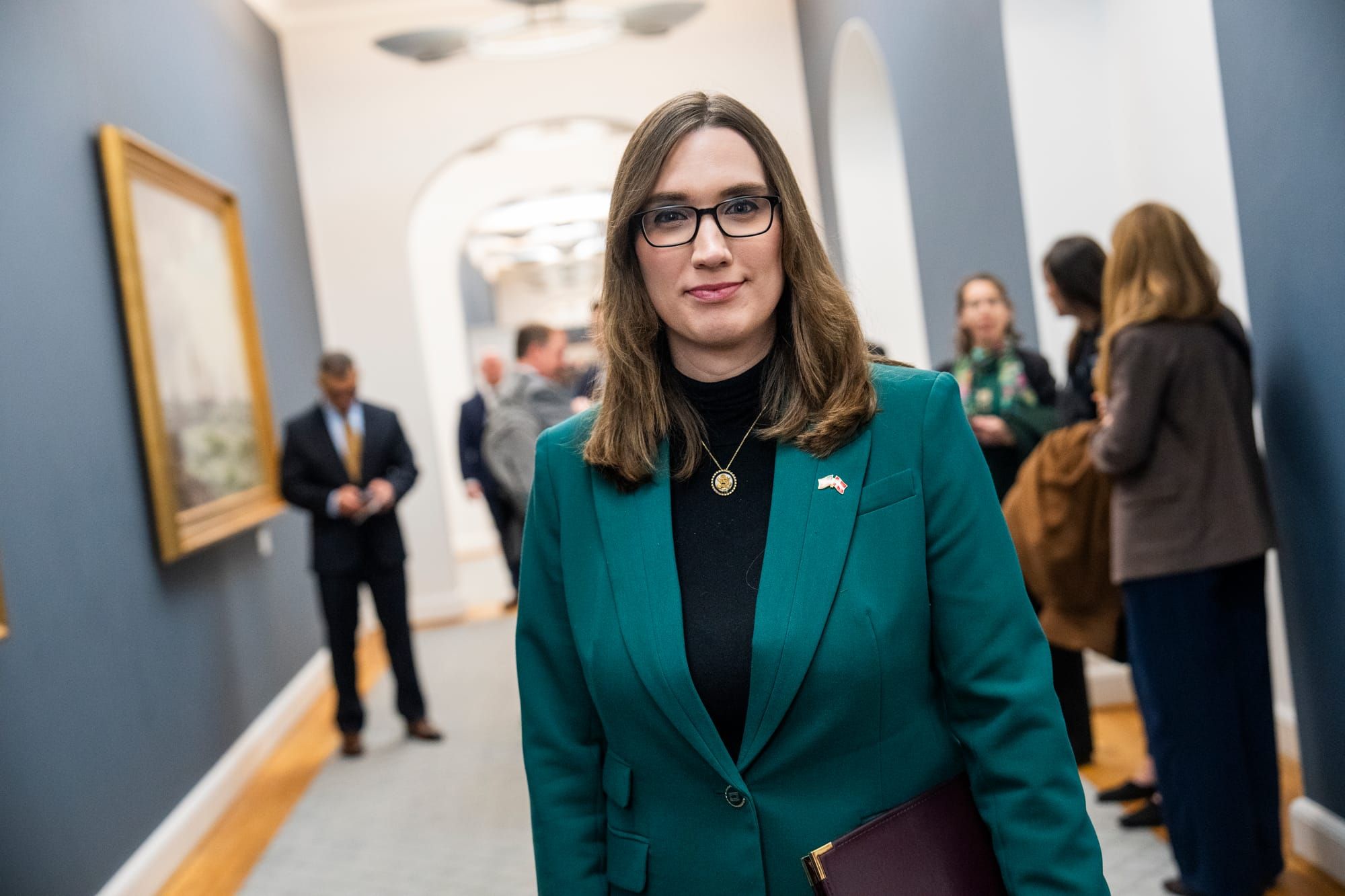
Under the headline “Democrats Picked a Wall Street Ally to Sell Their Affordability Agenda,” the outlet argued that McBride’s financial industry backing and votes on banking deregulation conflict with the incoming Democratic majority’s stated focus on lowering consumer costs.
The report arrives shortly after the Democratic Caucus nominated Rep. Hakeem Jeffries unopposed to serve as Speaker of the House when the new Congress convenes in January, despite vocal resistance from a contingent of progressive lawmakers who criticized Jeffries over his ties to pro-Israel lobbying groups such as AIPAC and corporate donors.
“Whether on Medicare for All, stopping ICE terror, getting money out of politics, or ending the genocide in Gaza, our constituents sent us to Congress with a mandate on these issues,” said a contingent of hard-left incoming members in a statement explaining why they opposed him. Jeffries was supported by 251 Democratic lawmakers.
The seven newcomers who were among the 11 votes against Jeffries and publicly voiced their positions were Democratic Representatives-elect Darializa Avila Chevalier (N.Y.), Adam Hamawy (N.J.), Frederick Haynes (Texas), Melat Kiros (Colo.), Donavan McKinney (Mich.), Chris Rabb (Pa.), and Claire Valdez (N.Y.).
Five of the members who voted against Jeffries and signed the statement were backed by the Democratic Socialists of America (DSA), which has hammered the Democratic Party for what they see as an abandonment of progressive ideals and a soft-glove approach to President Trump’s second term.
“While we have seen meaningful progress, there is still work to be done to ensure that the direction our party takes this coming Congress reflects what our constituents are demanding of leadership,” they said.
Leadership Elevation and Messaging Role
House Democrats elected McBride on November 19 as one of three co-chairs of the House Democratic Policy and Communications Committee (DPCC), the caucus’s primary messaging arm.
McBride—who made history in 2024 as the first openly transgender member of Congress—received 238 votes, the highest total among four candidates competing for the three co-chair slots.
Following the vote, McBride stated that House Democrats would be “laser-focused on lowering costs,” echoing Jeffries’ pledge that the incoming majority will prioritize affordability for working families.
Sludge’s Findings on Wall Street Contributions
According to Sludge’s review of Federal Election Commission (FEC) filings covering the 2025–2026 election cycle through October 14, McBride’s campaign committee and leadership PAC accepted at least $432,000 from finance industry PACs and individual donors. Key contributors highlighted in the report include:
- Wall Street Executives: Three billionaire finance executives each contributed the legal maximum of $7,000 to McBride’s campaign: Apollo Global Management CEO Marc Rowan, Lone Pine Capital founder Stephen Mandel, and Baupost Group CEO Seth Klarman.
- Financial Firms: Two employees of the quantitative trading firm Jane Street contributed a combined $24,000, while JPMorgan Chase employees gave $20,210—predominantly from the bank’s vice chair and general counsel.
- Industry PACs: Political action committees affiliated with Capital One, the American Bankers Association, and the American Financial Services Association also donated to her committees.
Legislative Record on Financial Regulation
Sludge reported that during her first term in Congress after taking office in 2025, McBride co-sponsored or voted for at least 11 Republican-led bills aimed at easing financial regulations, including measures affecting bank merger oversight, workplace retirement plan investments in private equity, and state interest rate caps.
Two specific legislative actions drew particular scrutiny in the report:
- Bank Merger Antitrust Reviews: On July 21, McBride voted in favor of a banking deregulation bill sponsored by Rep. French Hill (R-Ark.) that would eliminate federal antitrust reviews for a wide range of bank mergers. That same day, McBride and Hill jointly introduced separate bipartisan legislation to expand a tax credit for small businesses making workplace accessibility improvements for employees with disabilities.
- State Interest Rate Caps (American Lending Fairness Act): In May, McBride signed on as a co-sponsor of the American Lending Fairness Act, introduced by Rep. Warren Davidson (R-Ohio). Under a 1980 federal law, state-chartered banks can lend across state lines at the interest rates permitted in their home state, even if the borrower resides in a state with stricter rate limits—unless the borrower’s state formally opts out. States such as Colorado (in 2023) and Oregon (in 2026) passed opt-out laws to enforce local caps—such as Oregon’s 36% ceiling on consumer finance loans—against out-of-state banks partnering with online lenders. Davidson’s bill would amend the 1980 law so states could only enforce rate caps on banks and credit unions chartered within their own borders. On November 9, 18 Democratic state attorneys general sent a letter urging House leaders to block the legislation, warning it would allow online lenders to charge triple-digit interest rates.
Broader Political Context and Perspectives
McBride’s office did not respond to Sludge’s inquiries regarding her financial industry contributions or her votes on the regulatory bills.
Supporters and colleagues within the Democratic caucus have framed McBride’s legislative style around cross-aisle pragmatism and constituency service.
Upon taking office in 2025, McBride emphasized pursuing “common sense solutions” to lower the cost of raising a family and prioritized bipartisan collaboration, securing Republican co-sponsors on nine of the 10 bills she introduced during her first term.
Supporters of her leadership bid pointed to her broad support across the caucus—spanning both centrist and progressive wings—and her composure in the face of high-profile Republican attacks during her freshman term as assets for communicating the party’s agenda.
Conversely, progressive critics and campaign finance watchdogs, including Sludge—a nonprofit investigative outlet founded in 2018 to track money in politics across party lines—argue that elevating lawmakers with substantial corporate and financial sector backing undermines Democrats’ credibility when campaigning against predatory lending and corporate consolidation.


Leave a Reply